There are, I am sure, some people who are evil for the sake of being evil, or nearly so. They relish the thrill of getting away with it, or enjoy seeing others suffer. True cruelty exists as a means to the pleasure of another, who relishes the suffering of others.
Far more prevalent than this, though, is indifference. Evil is mostly banal, and it is more often caused by carelessness or apathy than for it own sake (or for the sake of some perverted pleasure derived from the suffering of others). For every man who seeks to persecute others for the sake of watching them suffer, there are many more who would "accidentally" persecute others for the sake of expediency or convenience.
Case in point:
This is real bigotry. This is real evil, raising its head to mock. Refusing to participate in somebody else's evil is not bigotry. Real small-mindedness is insisting that others must serve you at all times, that all other people are there for not but your convenience. Evil likes to trivialize itself: just offer one single, small, pinch of incense to Caesar, and hope that God does not notice or care. Bow down before the Golden calf, just once, what can it matter?
I saw a nice counterpoint to all of this:
This is difficult, and often untried. But we do live in a vale of tears, and those tears are all the more bitter because of the sheer cruelty of indifference. We don't live in a time and place of hard persecution--but it is certainly a time and place of soft persecution. This may seem trivial in comparison, as if there is a great gulf between what we suffer here and what martyrs suffer elsewhere: in a sense, there is a wide gulf. But even the greatest distance can be traversed by taking many small, seemingly trivial steps.
The thoughts, musing, and above all reflections of a hope-filled pessimist and a faithful skeptic. I'm a husband, a father, a teacher, and a scientist. I'm a corrective Thomist, a bibliophile, and a lay Dominican who is trying to pass the fruits.
Contra Mozilla
[close]
Firefox users we wanted to take this space to let you know what Mozilla, the company that makes Firefox has been doing, and it's not good. Mozilla recently forced its CEO to resign because he had, 6 years ago, donated $1,000 to a pro-family political group. Apparently Mozilla is intolerant of anyone that disagrees with their Liberal/progressive view of politics. To read more please visit WhyFirefoxIsBlocked.com. We aren't blocking Firefox, but we feel it is important to let you know what's going on. For those who are curious, the reason why we are not blocking firefox is that the script to do so also blocks a variety of firefox alternatives, such as IceDragon and others which are similar to firefox and based on the same open-source code. We do think it is important to push back on this issue: for starters, you can leave firefox a comment here. You can also switch to another browser: here are six more free browsers (besides IceDragon) which are supposed to be similar to FireFox (because they are based on the same open-source code) but which are not otherwise affiliated with Mozilla.
Showing posts with label Law of Unintended Consequences. Show all posts
Monday, April 18, 2016
Tuesday, April 7, 2015
Why The Tuition Is Too Damned High
![]() |
| Tuition is too damned high. |
"Some of this increased spending in education has been driven by a sharp rise in the percentage of Americans who go to college. While the college-age population has not increased since the tail end of the baby boom, the percentage of the population enrolled in college has risen significantly, especially in the last 20 years. Enrollment in undergraduate, graduate and professional programs has increased by almost 50 percent since 1995. As a consequence, while state legislative appropriations for higher education have risen much faster than inflation, total state appropriations per student are somewhat lower than they were at their peak in 1990. (Appropriations per student are much higher now than they were in the 1960s and 1970s, when tuition was a small fraction of what it is today.)College tuition has been able to continue rising because college has become the new high school, and is expected (if not actually compulsory) for a much greater number of people than in the past. It has become a necessary though not a sufficient "qualification" for many jobs which frankly do not need a college education to be done well. More on that in a minute, but first:
Interestingly, increased spending has not been going into the pockets of the typical professor. Salaries of full-time faculty members are, on average, barely higher than they were in 1970. Moreover, while 45 years ago 78 percent of college and university professors were full time, today half of postsecondary faculty members are lower-paid part-time employees, meaning that the average salaries of the people who do the teaching in American higher education are actually quite a bit lower than they were in 1970.As a tenure-track college professor, I can vouch for this. Most contracts are not full-year, but mine would in principle pay me the same rate for the summer as for the months on contract; in total, my base salary under those conditions would fall closer to 50k/year than 100k/year. To get this job, I spent 4 years as an undergraduate, then another 8 years as a graduate student (barely making ends meet with my TA/RA/AI stipends). I am the lucky one in that I did not spend 2-5 years as a postdoc (typical salary in academia: ~40k/year in my field, which is relatively well-paid) or visiting professor/lecturer (typical salary 40-50k/year).
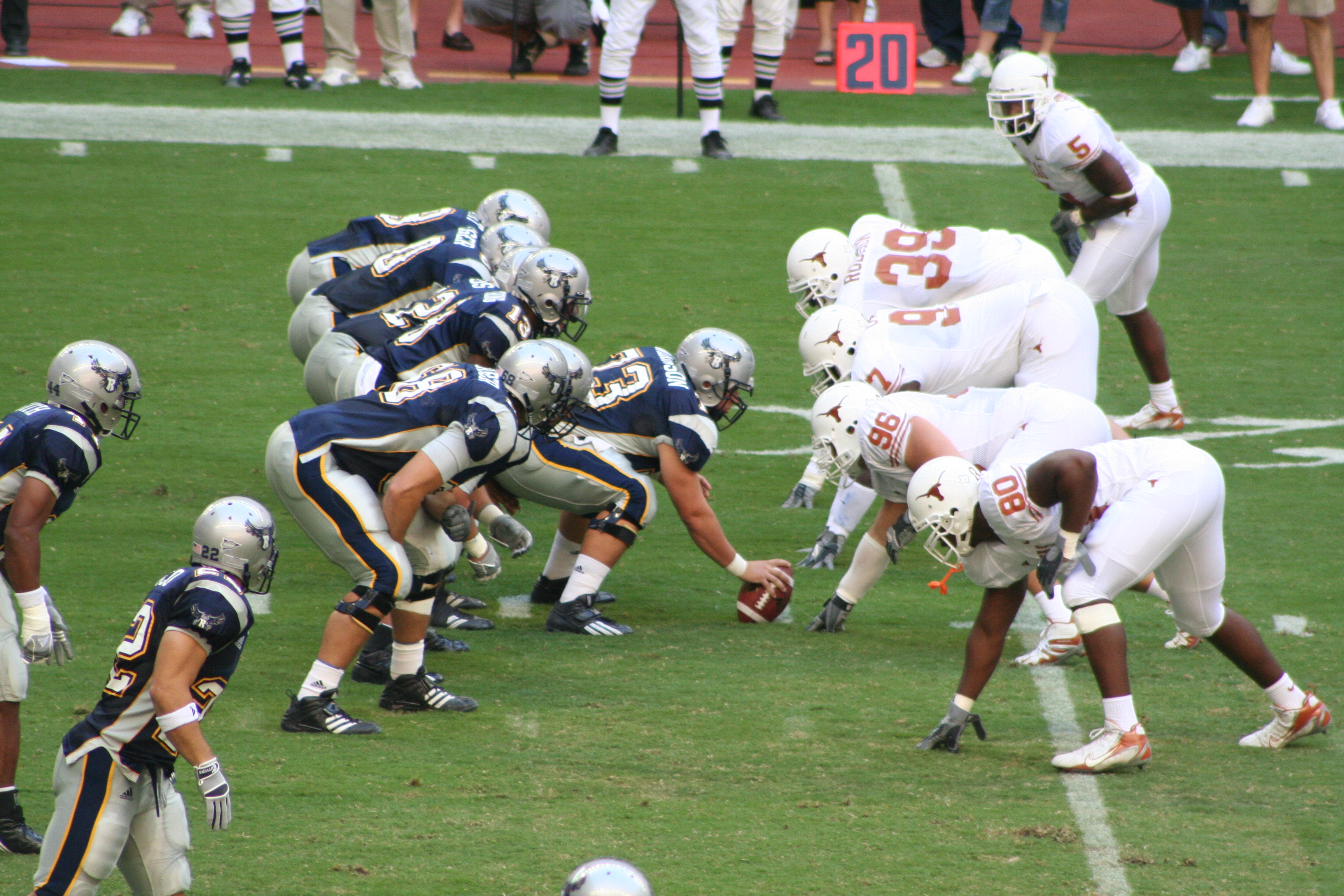
By contrast, a major factor driving increasing costs is the constant expansion of university administration. According to the Department of Education data, administrative positions at colleges and universities grew by 60 percent between 1993 and 2009, which Bloomberg reported was 10 times the rate of growth of tenured faculty positions.
![]() |
| Both schools likely made money off of this game. |
So athletics programs cannot really be blamed entirely for the rising cost of a college degree, nor the cheapening value of the education that the degree supposedly represents.
Rather, the problem lies with the fact that so many people are attempting to enroll in college. We have a surplus of students (though most smaller colleges, including the one which I work for, would claim that this is a good thing), which in turn means that colleges can get away with charging more and offering less. And, of course, because college loans are a particularly profitable form of usury, the banks are all-too-happy to comply with supplying the money for students to attend in the short term.
Furthermore, because many of these students don't actually want (or need) to be enrolled in college, they tend not to be particularly studious--but at the same time few want to do badly in the class. There is therefore an overwhelming pressure on teachers to "dumb-down" the material, and even to offer whole classes which are not college-level by their nature. Physical science, college pre-algebra, and computer information systems courses which teach the basics of typing and how to open word or excel files and make basic powerpoint presentations stand out to me as especially being remedial level classes. Practically every department has some "service" classes which meet a general education requirement and which probably shouldn't count toward the general requirements of a college degree, and yet which does. This is perhaps in part because every department needs to attract more students to get funding, but that's an issue for another day.
And yes, administration does siphon off a large chunk of change. So does playing the game of "keeping up with the Joneses," in which every state school attempts to add frivolous bells-and-whistles to attract more students, in a scramble to make MOAR PROFITS!!!. As a case-in-point: the small state university for whom I work is planning to open some more student housing--not necessarily a bad thing given that there is actually a shortage of student housing here. These new dorms include separate rooms for every student, each room coming furnished with a variety of amenities, including large-screen plasma TVs. Meanwhile, we have a shortage of space for classrooms, and a demand that all faculty at this small teaching university do research and write papers (=needing research lab space...).
The university at which I did my graduate degree seemed to be raising one new large building per year, some to replace functional if older buildings to do it. This was a very well-funded university, and many of the buildings were paid for in part by donations, so they could probably afford it. But the various smaller universities cannot, and they feel the need to be actively recruiting new students, which they do in part by attempting to keep up with the larger universities. These expenses are (not surprisingly) passed down to students in the form of higher tuition. Is it any wonder, then, that tuition has gone through the roof?
Thursday, April 3, 2014
TMM: Cop-Killing Laws
It's kind of old(ish) news, but I'm only now hearing of it: Indiana passed a law to make it legal for citizens to shoot cops who enter their homes illegally:
I think this kind of thing goes under the same general heading as the (long-since vetoed) Arizona bill which was meant to protect (or grant) religious liberties to those who wanted to opt out of participating in in "gay marriages." Namely, the intent of the law is probably good, but the fact that we even have to consider such laws is a sure sign that our nation (and civilization) is in decline. Actually, we need look no further than some of the comments in the article I linked about the cop-killing law.
In general, I am basically now in favor of this kind of law, for the simple reason that many police (individuals as well as entire departments) abuse their authority. The no-knock entry seems like a good idea, until it is used against petty criminals--or worse, innocent victims whose house is invaded by accident when the police get the wrong address.
A frequent complaint on gun-owners' rights sites (and forums, threads, etc) is that thanks to these no-knock entries and occasional wrong houses, the innocent home-owner now has to waist precious time ensuring that the people invading his home aren't police officers. This is time which might be costly in the event that the invader is a dangerous criminal [1]. Actually, since the police are increasingly likely to harm (or even kill) the occupants of the home regardless of whether or not they are guilty would suggest that they should be treated like average criminals whenever entering a home. A better law would almost certainly be to ban the no-knock entry (and no warrantless entries whatsoever), with automatic civil and criminal penalties against any officer who enters a house without permission or who harms any of the occupants therein.
But all of this goes back to my earlier point--made in the context of the Arizona bill--that we are increasingly living in a country in which rights must be spilled out in the law or they become nonexistent. Prudence is a dying virtue, whether among the citizens, the police, or the legislators and judges. It is a simple matter of common sense that people have a right to self-defense, in particular when they are at home. That is true whether the aggressor is hiding behind a badge or not.
----
[1] Speaking of which, the question might be raised as to which is more likely: the entrance of a dangerous criminal, or of the police. If the former, then time is being wasted in what is more likely than not a dangerous scenario. If the police are more likely to enter this way, then the law becomes even more obviously relevant, since this would tend to indicate that the polices' irresponsibly entering a home is an all-too-frequent occurrence.
Self-defense is a natural right; when laws are in place that protect incompetent police by removing one’s ability to protect one’s self, simply because the aggressor has a badge and a uniform, this is a human rights violation. Indiana is leading the way by recognizing this right and creating legislation to protect it.
Of course cops have already begun to fear monger the passage of this bill, “If I pull over a car and I walk up to it and the guy shoots me, he’s going to say, ‘Well, he was trying to illegally enter my property,’ ” said Joseph Hubbard, 40, president of Jeffersonville Fraternal Order of Police Lodge 100. “Somebody is going get away with killing a cop because of this law.”
Instead of looking at the beneficial aspect of this law, which creates the incentive for police to act responsibly and just, Hubbard takes the ‘higher than thou’ attitude and is simply worried about himself.
How about questioning the immoral laws that you are enforcing in the first place? Or how about sympathizing with the innocent people whose pets and family members have been slain, due to police negligence?
I think this kind of thing goes under the same general heading as the (long-since vetoed) Arizona bill which was meant to protect (or grant) religious liberties to those who wanted to opt out of participating in in "gay marriages." Namely, the intent of the law is probably good, but the fact that we even have to consider such laws is a sure sign that our nation (and civilization) is in decline. Actually, we need look no further than some of the comments in the article I linked about the cop-killing law.
In general, I am basically now in favor of this kind of law, for the simple reason that many police (individuals as well as entire departments) abuse their authority. The no-knock entry seems like a good idea, until it is used against petty criminals--or worse, innocent victims whose house is invaded by accident when the police get the wrong address.
A frequent complaint on gun-owners' rights sites (and forums, threads, etc) is that thanks to these no-knock entries and occasional wrong houses, the innocent home-owner now has to waist precious time ensuring that the people invading his home aren't police officers. This is time which might be costly in the event that the invader is a dangerous criminal [1]. Actually, since the police are increasingly likely to harm (or even kill) the occupants of the home regardless of whether or not they are guilty would suggest that they should be treated like average criminals whenever entering a home. A better law would almost certainly be to ban the no-knock entry (and no warrantless entries whatsoever), with automatic civil and criminal penalties against any officer who enters a house without permission or who harms any of the occupants therein.
But all of this goes back to my earlier point--made in the context of the Arizona bill--that we are increasingly living in a country in which rights must be spilled out in the law or they become nonexistent. Prudence is a dying virtue, whether among the citizens, the police, or the legislators and judges. It is a simple matter of common sense that people have a right to self-defense, in particular when they are at home. That is true whether the aggressor is hiding behind a badge or not.
----
[1] Speaking of which, the question might be raised as to which is more likely: the entrance of a dangerous criminal, or of the police. If the former, then time is being wasted in what is more likely than not a dangerous scenario. If the police are more likely to enter this way, then the law becomes even more obviously relevant, since this would tend to indicate that the polices' irresponsibly entering a home is an all-too-frequent occurrence.
Wednesday, July 24, 2013
Minimum Sentencing and No Child Left Behind
I like Mark Shea, I really do. I preface this post with this statement because sometimes he gets the facts wrong (or doesn't have all of the facts), and bad conclusions follow. This is such a case. Perils of blogging quantity and all that--it can't all be high quality (as he wryly admits in the tagline to his own blog).
His commenters are largely pointing out to him where he's gone wrong: minimum sentencing requirements for Florida, the woman left the house after her husband allegedly got violent, got a gun, then came back and fired a shot in the general direction of her husband (and children), which is a bit different from what Zimmerman did. That warning shot missed the husband's head by mere inches, by the way. The woman also had a history of assault, which Zimmerman does not, thus triggering the minimum sentencing; and also, Zimmerman never invoked Stand Your Ground Laws, whereas this woman (who definitely was not just "standing her ground") attempted to do so. In neither case was the law really applicable (in the woman's case, she had already "escaped" and then returned; in Zimmerman's, there was no chance to escape once the confrontation became actually violent enough to warrant running away). And neither case has anything to do with race, but both are being used by the race baiters (and to bad effect elsewhere), into whose hands Shea is unfortunately playing.
Here is the court document in Mrs. Alexander's case, and her is the "relevant part" quoted by Ace:
Ace also notes that Mrs. Alexander wasn't even actually living in the home at the time, for what that's worth. With this bit of ranting out of the way, I noticed an interesting comment on Shea's blog, comparing minimum sentencing (a fad in the 1980's) with No Child Left Behind (from President George W. Bush's Administration):
Both would rather appear to strike at the idea of subsidiary, at least.
His commenters are largely pointing out to him where he's gone wrong: minimum sentencing requirements for Florida, the woman left the house after her husband allegedly got violent, got a gun, then came back and fired a shot in the general direction of her husband (and children), which is a bit different from what Zimmerman did. That warning shot missed the husband's head by mere inches, by the way. The woman also had a history of assault, which Zimmerman does not, thus triggering the minimum sentencing; and also, Zimmerman never invoked Stand Your Ground Laws, whereas this woman (who definitely was not just "standing her ground") attempted to do so. In neither case was the law really applicable (in the woman's case, she had already "escaped" and then returned; in Zimmerman's, there was no chance to escape once the confrontation became actually violent enough to warrant running away). And neither case has anything to do with race, but both are being used by the race baiters (and to bad effect elsewhere), into whose hands Shea is unfortunately playing.
Here is the court document in Mrs. Alexander's case, and her is the "relevant part" quoted by Ace:
[Gray] moved to the living room where his children were. Subsequently, [Alexander] emerged from the master bedroom and went into the garage where her car was parked. [Alexander] testified she was trying to leave the residence but could not get the garage door to open. (The Court notes that despite [Alexander's] claim she was in fear for her life at that point and trying to get away from [Gray], she did not leave the house through the back or front doors which were unobstructed. Additionally, the garage door had worked previously and there was no evidence to support her claim.) [Alexander] then retrieved her firearm from the glove box of the vehicle. [Alexander] returned to the kitchen with the firearm in her hand and pointed it in the direction of all three victims. [Gray] put his hands in the air. [Alexander] shot at [Gray], barely missing his head. The bullet traveled through the kitchen wall and into the ceiling in the living room. The victims fled the residence and immediately called 911. [Alexander] stayed in the marital home and at no point called 911.
Ace also notes that Mrs. Alexander wasn't even actually living in the home at the time, for what that's worth. With this bit of ranting out of the way, I noticed an interesting comment on Shea's blog, comparing minimum sentencing (a fad in the 1980's) with No Child Left Behind (from President George W. Bush's Administration):
I heard she had been in trouble with the law before for assault and that's what triggered the mandatory sentencing. And also that it wasn't stand your ground because she went out of the house and came back and shot the gun off endangering the children present. The real problem here is the mandatory sentencing which was a big movement back in the 1980s. To me it is like No Child Left Behind in that it takes the authority away from the judge (or teacher) on how to, you know, judge or teach. So instead they have to follow guidelines that may or may not make sense in an individual's case.
Both would rather appear to strike at the idea of subsidiary, at least.
Wednesday, July 17, 2013
Laws of Nature
I find it amazing that so many people who insist that the laws of
nature are inexorable fail to apply that principle to human nature. The
more inexorable a law, the less capable we are of thwarting that law
through technical knowledge, and the worse will be the damage when we
try and fail. Though, I think, not quite as bad as when we actually
succeed, rare as that may be.
Subscribe to:
Posts (Atom)


