Contra Mozilla

Showing posts with label Economics. Show all posts

Monday, June 8, 2026

Learning to Code

 About a decade or so ago, the mantra "Learn to Code" was quite big, and a number of organizations launched to teach us all how to do just that. At the end of the decade, we even had a presidential hopeful--and eventually, a president--who coldly told a number of Americans who were losing their jobs to environmental regulations that they should "learn to code."

Here we are now less than a decade later*, and AI has started to cause mass-layoffs in these coding positions. What has AI not yet replaced? Skilled labor positions (electricians, plumbers, welders, etc). This is not to say that all of the time spent learning to code was wasted: there is still a need for some people to be able to check AI's output, for example, and there are always new avenues open to skilled programmers, to say nothing of programming as a hobby.

But, it is worth noting that there remains a high demand for blue-collar jobs, and that besides this there will generally always be three things which will be compensated: specialized skills, accountability, and willingness to to "undesirable" jobs.


----

*Less, in fact, that twice the four years needed to earn a B.S. degree in computer science, for those counting.

Monday, April 4, 2016

What Is Best in Life: Sanders the Bernbarian Edition

What is best in life?
This is basically what the Left represents in modern times (well, that and Moloch worship, and protection of ever more deviant perversions at the cost of curtailing actual freedoms).

On a related note, Time's financial section (Money) has linked to a pair of simple tax calculators, one by the International Business Times, and one by Vox, which attempt to estimate the impact of the four* major candidates tax plans on how much you should expect to pay  in federal taxes. They also attempt to estimate how these tax plans will impact the federal budget (and deficit--there are no projected surpluses). Neither site paints an especially rosy picture for any of the candidates.

On the individual side of things, most people would benefit in the form of more take-home money from both Cruz and Trump (the calculates both estimate that I will take home a few thousand dollars more annually under Cruz and a little more under Trump--but there are no deductions considered for one, and only number of children is considered in the other). Clinton's tax is a wash for the middle class--you don't pay much more, but you do pay a little more.

Bernie Sanders' tax plan is a complete disaster. Vox estimates that my annual tax burden will increase by a staggering $10 000, and the International Business Times estimates a $430 increase to my monthly taxes, which is about comparable**. This, to pay for things of disputable benefit. We don't need a federal healthcare plan, nor should we pay for every kid to go send 4 years at college: the former will mean a worsening of our healthcare in general (longer waiting lines, perhaps rationing or worse, and I can imagine how things like the tyrannical HHS contraceptive/abortion mandate will only be expanded, and worked around whatever Supreme Court ruling is handed down); the latter will mean that college is further dumbed down (it's already slipping there somewhat, and the value of many BS degrees is often worse than worthless). We have "free" k-12 education already, improving the quality of that would work far more wonders than tacking on another 4-6 years of college "education. And from a purely selfish standpoint, I see these as especially burdensome to me: the few actual perks of my job include steeply discounted tuition for my family, "free" health insurance***, and a pension plan****. So people like me will lose out the most on Bernie Sanders, because we will see a large tax increase to fund entitlements that we already pay or receive as a perk (read: non-cash payment) to our jobs.

On the other side of things, none of the candidates have made specific plans for cutting back our already bloated federal budget. The result is that while Ted Cruz and Donald Trump will cut taxes somewhat, they will also be increasing our debt (which has soared to nearly $20 Trillion as of this writing). Not that Bernie Sander or Hillary Clinton avoid doing this, mind you. The outlook for this election is bleak.


*John Kasich is excluded, but then again, he is mathematically eliminated from winning the nomination at anything short of a brokered convention (which actually is looking more and more likely).

**Vox includes everything from income tax to payroll tax to corporate tax. International Business Times does not, as far as I can tell.

***I pay for some of it, and of course I "pay" for some more in a reduced salary, my boss has estimated by about $20000/year. I don't hold high hopes for getting to pocket that money if we go to universal healthcare.

****Which actually take a substantial portion of my monthly paycheck, just under 10% of my earnings, so it is really more like a mandatory group investment.

Monday, April 27, 2015

Perspective

I gave an exam today, which had a Fermi problem which is meant to help visualize the national debt. The first part of the problem is to estimate the national debt. According to Forbes, this has just recently passed the $18 trillion mark. That's $18 000 000 000 000, or roughly $54 000 per person living in the US.

In grading the exams, I notice that many of my students would estimate the national debt to be $1 billion or even $100 billion. One guessed $670 billion and commented that she was sure this was too large. This makes me a) sad at how badly informed they are, and b) realize how depressingly large the national debt actually is. It is so large, that many of these people cannot even conceive of it, and cannot conceive of a country which owes so much money.

There is a third thing which I realize: the federal government gets away with it, largely because the people who will likely end up having to pay this thing off (those between my and my children's generations) are unaware of the scope of the problem. If the debt were only $1 billion, it would be easily rectified (that's $3 per person in the US). Even $ 100 billion is solvable in a short period of time.

What we have now might be solvable, if it is approached as the equivalent of paying off student loan debts, or maybe a house payment. But the first step is to start living below and not above our means as a country. There is no sign that this will be happening any time soon, at least not of our own volition.

Tuesday, April 7, 2015

Why The Tuition Is Too Damned High

Tuition is too damned high.
The New York Times managed to publish an opinion piece written by somebody other than Ross Douthat which is actually well-written and intelligently thought out. The piece is about the ever-raising costs of tuition at the college level:

"Some of this increased spending in education has been driven by a sharp rise in the percentage of Americans who go to college. While the college-age population has not increased since the tail end of the baby boom, the percentage of the population enrolled in college has risen significantly, especially in the last 20 years. Enrollment in undergraduate, graduate and professional programs has increased by almost 50 percent since 1995. As a consequence, while state legislative appropriations for higher education have risen much faster than inflation, total state appropriations per student are somewhat lower than they were at their peak in 1990. (Appropriations per student are much higher now than they were in the 1960s and 1970s, when tuition was a small fraction of what it is today.)
College tuition has been able to continue rising because college has become the new high school, and is expected (if not actually compulsory) for a much greater number of people than in the past. It has become a necessary though not a sufficient "qualification" for many jobs which frankly do not need a college education to be done well. More on that in a minute, but first:
Interestingly, increased spending has not been going into the pockets of the typical professor. Salaries of full-time faculty members are, on average, barely higher than they were in 1970. Moreover, while 45 years ago 78 percent of college and university professors were full time, today half of postsecondary faculty members are lower-paid part-time employees, meaning that the average salaries of the people who do the teaching in American higher education are actually quite a bit lower than they were in 1970.
As a tenure-track college professor, I can vouch for this. Most contracts are not full-year, but mine would in principle pay me the same rate for the summer as for the months on contract; in total, my base salary under those conditions would fall closer to 50k/year than 100k/year. To get this job, I spent 4 years as an undergraduate, then another 8 years as a graduate student (barely making ends meet with my TA/RA/AI stipends). I am the lucky one in that I did not spend 2-5 years as a postdoc (typical salary in academia: ~40k/year in my field, which is relatively well-paid) or visiting professor/lecturer (typical salary 40-50k/year).
By contrast, a major factor driving increasing costs is the constant expansion of university administration. According to the Department of Education data, administrative positions at colleges and universities grew by 60 percent between 1993 and 2009, which Bloomberg reported was 10 times the rate of growth of tenured faculty positions.
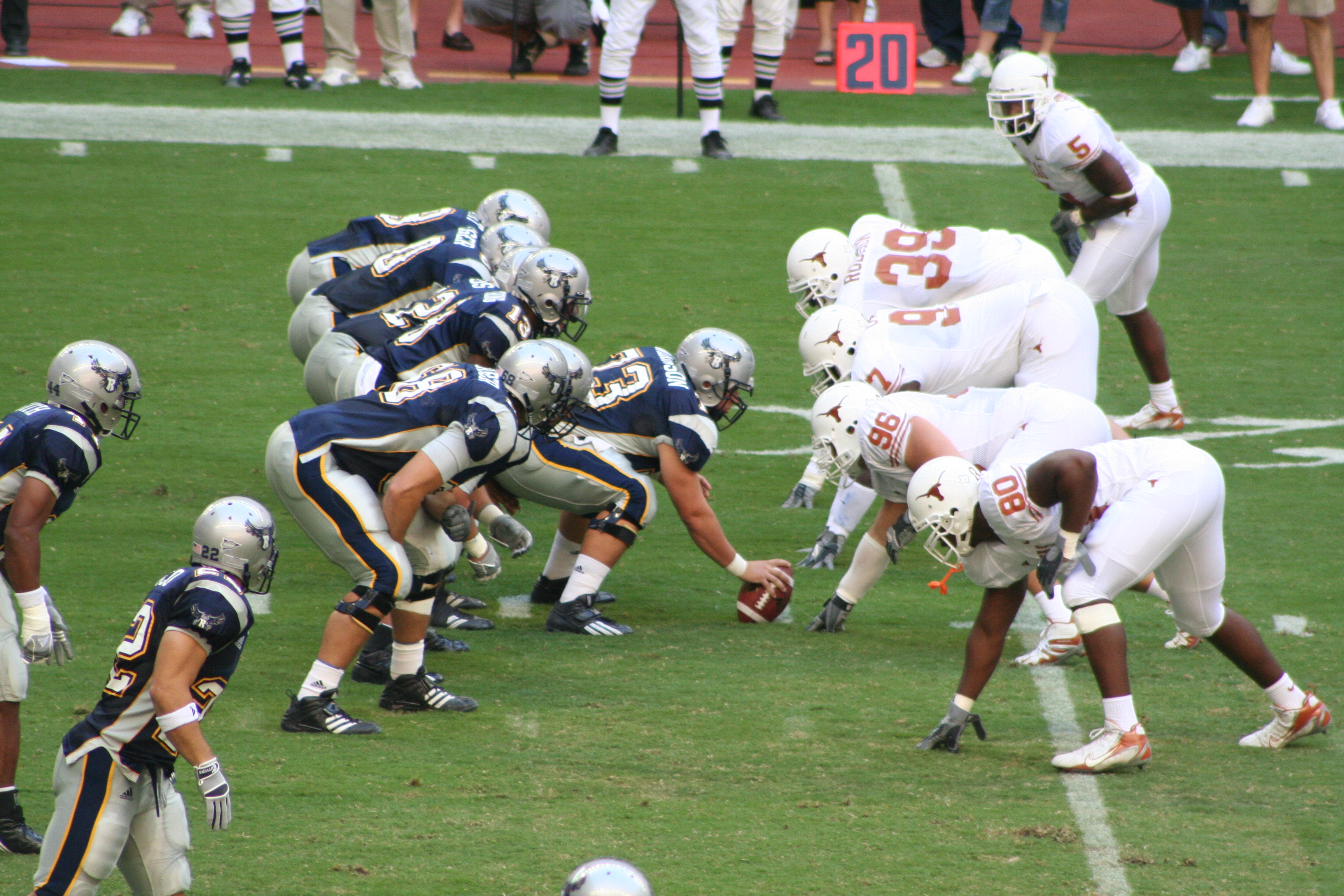
Both schools likely made money off of this game.
Administration is one reason for high costs of education. It is tempting to blame athletics as another, though many schools either rake in a net profit from athletics (my alma mater) or have little or no school-funded athletics programs (many smaller schools, including state schools); tuition at these schools has basically kept pace with everywhere else.

So athletics programs cannot really be blamed entirely for the rising cost of a college degree, nor the cheapening value of the education that the degree supposedly represents.

Rather, the problem lies with the fact that so many people are attempting to enroll in college. We have a surplus of students (though most smaller colleges, including the one which I work for, would claim that this is a good thing), which in turn means that colleges can get away with charging more and offering less. And, of course, because college loans are a particularly profitable form of usury, the banks are all-too-happy to comply with supplying the money for students to attend in the short term.

Furthermore, because many of these students don't actually want (or need) to be enrolled in college, they tend not to be particularly studious--but at the same time few want to do badly in the class. There is therefore an overwhelming pressure on teachers to "dumb-down" the material, and even to offer whole classes which are not college-level by their nature. Physical science, college pre-algebra, and computer information systems courses which teach the basics of typing and how to open word or excel files and make basic powerpoint presentations stand out to me as especially being remedial level classes. Practically every department has some "service" classes which meet a general education requirement and which probably shouldn't count toward the general requirements of a college degree, and yet which does. This is perhaps in part because every department needs to attract more students to get funding, but that's an issue for another day.

And yes, administration does siphon off a large chunk of change. So does playing the game of "keeping up with the Joneses," in which every state school attempts to add frivolous bells-and-whistles to attract more students, in a scramble to make MOAR PROFITS!!!. As a case-in-point: the small state university for whom I work is planning to open some more student housing--not necessarily a bad thing given that there is actually a shortage of student housing here. These new dorms include separate rooms for every student, each room coming furnished with a variety of amenities, including large-screen plasma TVs. Meanwhile, we have a shortage of space for classrooms, and a demand that all faculty at this small teaching university do research and write papers (=needing research lab space...).

The university at which I did my graduate degree seemed to be raising one new large building per year, some to replace functional if older buildings to do it. This was a very well-funded university, and many of the buildings were paid for in part by donations, so they could probably afford it. But the various smaller universities cannot, and they feel the need to be actively recruiting new students, which they do in part by attempting to keep up with the larger universities. These expenses are (not surprisingly) passed down to students in the form of higher tuition. Is it any wonder, then, that tuition has gone through the roof?

Thursday, March 12, 2015

Women in Currency

President Obama suggested not so long ago that we should have more women on U.S. currency. The simple idea of doing this does not particularly bother me--we have already had Sacagawea and Susan B. Anthony on the dollar coins, plus Helen Keller on the quarter (well, the Alabama quarter) and Martha Washington on the $1 paper certificate.

More recently, there has been a small campaign aimed at getting a woman on the $20 bill--again, I don't really mind this idea. Andrew Jackson wasn't a very good president (and honestly, he beat a better one when first elected), and we do have non-presidents on paper currency (hello, Benjamin!). With that said, my bigger worry is that we would get somebody like Hillary Clinton (if she wins the presidency in 2016, thus continuing what will have been a pair of 8-year tragedies in the White-house); or for that matter a number of the people listed by the campaign. I'd be fine with Rosa Parks (who is a sort of civil rights hero), or Harriet Tubman (ditto), or Sojourner Truth (ditto again); and it would be interesting to see Elizabeth Ann Seton (though that's never going to happen!) on the twenty.

On the other hand, there are a number of women whom I would be appalled to see honored by our currency which are (unsurprisingly) on the campaign's list: Betty Friedan would be awful, and Margaret Sanger would cause me to stop carrying or accepting 20's.

Thursday, February 12, 2015

Some Random Reflections

I have  variety of random observations, thoughts, and remarks rattling around inside my head. I suppose that I might as well write them here.

The first is that and increasing number of people who I would have previously assumed would act as cheerleaders for the Republican party are starting to rumble that they would prefer a third party, or at the least a re-aligning of interests for the GOP, even if this requires voting third-party for a few election cycles. This group now includes Erik Erickson from RedState, Jay Cost at The Federalist, and Ace. I'd like to see social policy put first, rather than seeing the party largely surrender every battle of the culture wars. It would be nice to at least get a coalition together that is moderately pro-life enough to pass incremental abortion bans (after 20 weeks, for starters) with some consistency--especially when said bans are already popularly supported. And it would be similarly nice to see some sort of interest in making a workable solution that at the very least protects religious freedoms and rights of association and free speech on the whole "gay marriage" front.

Second random thought: since poll taxes are not allowed, and poll tests are not allowed, perhaps the next best thing is to require that all votes for a candidate be write-in only. Meaning; the Republicans and the Democrats and everyone else can still have their nominees at any given office, but the voters can no longer just lazily fill in a bubble next to their names. You will write out the name of the man or woman for whom you are voting; spelling errors can be accounted for via common sense, and of course in the age of computerized voting, by "write" I mean "type", so illegible handwriting is not an issue. And in places where there are ballot measures, you will at least write in "yes on ballot #" or "no on ballot #" (specifying the number) to have your vote for that ballot counted.

Third random thought: Eye of the Tiber continues to be funny, this time in a sad way which comments on the hypocrisy of our culture.

Fourth random thought: a better way for making college "affordable." Recall that President Obama had originally proposed raiding peoples' college savings accounts (529 accounts) by taxing any withdrawal from these (the deposits are often taxed already). This was in order to pay for other people who couldn't (or simply didn't bother to) save up for college, so that they could go to a community college for "free", thereby making two more years of school de-facto compulsory. Here is a counter-proposal. If getting people to go to college means so much, why not make any payment for tuition (or repayment of a loan) tax-deductible at a special rate. The rate is: for every dollar you spend paying for your own tuition up front, you will pay $1 fewer in taxes. For every dollar you spend paying your own student loans, you will pay $0.75 less on your taxes that year. And for every dollar you spend paying for someone elses' tuition or student loans, you get back 50% of the return they would have had.

Fifth random thought: enjoy this fanciful fairy tale from the Imaginative Conservative.


Monday, January 26, 2015

A Few Good Links (vol. 17)

For some reason it's more difficult for me to post on Mondays on my current schedule. I don't know why, but it is.
  1. Professor Robert P. George is leading a group of seven people who have offered to take 100 lashes each in solidarity with Raif Badawi, the Saudi Arabian blogger who was sentenced to 1000 lashes and 10 years in jail for violating sharia. The offered to take these lashes so that he wouldn't have to.
  2. My co-blogger will probably be disappointed to learn that the video of the Danish archer is apparently more about audience gullibility than actual archery skill.
  3. An interesting topic which I have discussed before is back on the blogosphere (kind of): Edward Feser and the Nicene Guys both discuss Monogenism and Polygenism and the question of human origins.
  4. One problem with the modern view of the world is that it conflates vocation with career. The two are not identical.
  5. President Obama continues his war against the middle class. Really, a war against anyone who didn't vote for him, which is in some ways actually worse than simply a war against the middle class, since that one is at least not in principle personal.
  6. Vintage Christianity, summarized. I disagree with his assessment of how the Reformers went back to how the Church was in its earliest days (some may have thought that's what they were doing), but the rest is a good read.
  7. There's nothing wrong with the "seamless garment" metaphor as applied to Catholic social teaching, but it is unfortunately used with some frequency as a cover for hypocrisy and intellectual dishonesty.
As always, I would lie to revisit some of these links--but I probably won't!

Wednesday, April 23, 2014

TMM: Women and Wages in the Workplace

It is considered a blasphemy against the secular sensitivities to say anything against women in the workplace. Allow me to therefore make a brief contrarian observation. While I don't oppose a woman's "right to work" (that's a job for labor unions), I do question whether an integrated workplace is necessarily a good thing. The progressive party line, parroted by so many "free-thinkers," is that equality is a good thing, and thus that it must be encouraged wherever possible, and sometimes forced when impractical.

And, to the extent that this leads to equality of opportunity, it is mostly a good thing. Where it fosters commutative justice, so much the better. The problem is that more often that not, equality is less about commutative justice and more about quashing distributive justice. Thus, for example, there was a time when a "living wage" had been established for American men--and was dis-established by the outcry it caused among feminists [1]. It is debatable as to whether the abolition of this built-in wage difference brought about commutative justice--the progressive, feminist line is that it did, which must be why they now spend so much time whining about the myth of income inequality--but it is certain that the result was a reduction in distributive justice.

Men could not be the guaranteed breadwinners for their families, even when they were gainfully employed. Of course, in some families this task now falls to women, but in many more, particularly poor families, the result is the loss of a breadwinner.


[1] Source: Donna Steichen's essay on Feminism in Disorientation: The 13 "Isms" Which Will Send You to Intellectual La-La Land.

Wednesday, January 8, 2014

Buying Insurance Under Obamacare

Here's a nifty video which explains how it works:


Actually, this video misses a few points.

For one, there isn't a long line at the coffee shop in front of the protagonist. For another, the protagonist isn't being forced to violate any of his beliefs or morals, in short to violate his conscience, in order to buy the coffee for himself or his employees. But the video does do a reasonably good job, as far as it goes.

Wednesday, December 18, 2013

On Winning the Lottery

My wife and I were talking about winning the lottery (we didn't actually win it, of course, unless you count winning $4 for a $1 ticket)--and joking about it, too--and it seems that we aren't the only ones. In the last year or so, it seems the Mega Million and Pwerball lotteries (but I repeat myself) have frequently boasted jackpots in the hundreds of millions of dollars. Several times the jackpot has exceeded half a billion bucks. Yikes!

We are apparently not alone in these musings, as Rebecca Hamilton shares her own thoughts on this on her blog. I mostly concur with her, and actually would put the money to a very similar use (exchange Austin for Oklahoma city, and I would probably build up some nice chapels etc around the state and/or country and staff them with Dominicans; donate a bunch to the Sister of Mary, Mother of the Eucharist (they've set up shop nearby), and I would probably try to set up some sort of small trust for my children (current and future). Oh, and eliminate that student loan debt.

One of the more thought-provoking points brought up by Mrs. Hamilton is this:

The amount of money that was on the line in the lottery yesterday — hundreds of millions of dollars — was beyond my comprehension. My husband told me that if we won it, we’d have to move and go incognito for our own safety.
My reaction to that was thank you, but no. That doesn’t sound like a gift. It sounds like a sentence.
My home/family/community give my life structure. This is my place, my spot in the world. What could money possibly give me to compensate for losing that?

She concludes by asking if winning the lottery would be a blessing, or a sentence.

Something similar crossed my own mind in thinking about this: would it be a blessing, or a curse to suddenly acquire that much wealth? For some, it would surely be a blessing, and many more would echo Dean Martin and Jerry Lewis:
Ask the rich man he'll confess
Money can't buy happiness
Ask the poor man he don't doubt
But he'd rather be miserable with than without
For me, I think that winning that much money suddenly would be a curse. It would be another "talent" to steward, and I don't think I would do that. It's not something I want to be answerable for some day--have I used this vast fortune wisely? Some men would be able to, and some certainly do. There's nothing wrong with having a fortune, so long as it is used (invested, donated, etc) wisely. And I may be able to do so.

I'm also certainly at a different stage of life and in a different financial state than Mrs. Hamilton. I don't know that I would want $636 million to worry about, but I wouldn't mind seeing tens of thousands of dollars of student loan debt disappear, or of seeing a few hundred thousand big ones appear in a retirement account for my wife and myself; it's not that this would make me quit my day job, but rather would let me pursue a job which would pay less but carry more satisfaction (like teaching, or thinking and writing, and not merely about physics).

Winning enough money to wipe out debts and afford a house or put away for retirement would be nice, and I think I could manage that. But enough to buy a neighborhood is also more than I could really fathom. Though the temptation to buy an island somewhere and to leave the country before things get any worse s strong...


Monday, October 21, 2013

Quick Link: Why Government Spending Increases

Rod Dreher explains in a short post why the federal budget and the debt ceiling keep increasing. The answer is simple: the budget's discretionary spending can be divided into four parts, Social Security, Medicaid, Military, and Everything Else. Few people want to see cuts in the Big Three (personally, I'd like to see both SS and Medicaid (and other healthcare programs) get the axe, and am ambivalent about the military), and it seems like people over the age of 50 (read: likely voters) get especially irate whenever a suggestion is made to make any changes to either Medicaid of Social Security. A few people clamor for cuts to the military's budget, but even this doesn't seem  like a big enough bloc of people to effect change there. So, we're left with Everything Else, which is largely the part of the government which went on shut-down.

Tuesday, October 15, 2013

Quick Links: On The Obamacare Website

I have two quick links on the ill-conceived ACA's website roll-out. The first is mostly a PSA of sorts: John McAfee, founder of the anti-virus software company, says that this website is "a hacker's wet dream." So maybe it's a good thing that the site doesn't work, since this might help dissuade people from entering all of their personal information onto the web for every hacker and identity thief to peruse at their leisure. The second is from Forbes, which is asking whether perhaps the websites troubles are a feature and a deliberate one at that: the crashes are to distract people from the true costs of Obamacare:
A growing consensus of IT experts, outside and inside the government, have figured out a principal reason why the website for Obamacare’s federally-sponsored insurance exchange is crashing. Healthcare.gov forces you to create an account and enter detailed personal information before you can start shopping. This, in turn, creates a massive traffic bottleneck, as the government verifies your information and decides whether or not you’re eligible for subsidies. HHS bureaucrats knew this would make the website run more slowly. But they were more afraid that letting people see the underlying cost of Obamacare’s insurance plans would scare people away.... 
The federal government’s decision to force people to apply before shopping, Weaver and Radnofsky write, “proved crucial because, before users can begin shopping for coverage, they must cross a busy digital junction in which data are swapped among separate computer systems built or run by contractors including CGI Group Inc., the healthcare.gov developer, Quality Software Services Inc., a UnitedHealth Group Inc. unit; and credit-checker Experian PLC. If any part of the web of systems fails to work properly, it could lead to a traffic jam blocking most users from the marketplace.” 
Jay Angoff, a former federal official at the agency that oversees the exchange, told the Journal that he was surprised by the decision. “People should be able to get quotes” without entering all of that information upfront... 
Think about it. It’s quite possible that much of this disaster could have been avoided if the Obama administration had been willing to be open with the public about the degree to which Obamacare escalates the cost of health insurance. If they had, then a number of the problems with the exchange’s software architecture would never have arisen. But that would require admitting that the “Affordable Care Act” was not accurately named.
To be blunt, the premium hikes are their to distract people from the true costs of Obamacare.

Wednesday, October 9, 2013

Quick Link: Remember When...

Does anybody else remember the days shortly after the election (2012) during which the heavy criticism against the Republican party was that too many of their candidates (mostly, Tea-Partiers) were too concerned about social issues? The argument ran that if we could just focus on economics issues, and perhaps on fighting against big government, the party would be popular and in power. That criticism was mostly from people billing themselves as friends of the party (nobody should care about the criticisms of the Democratic party operatives, since they aren't interested in helping the Republicans to win nor in solving any of the country's problems so long as the Democrats stay in power and the country moves ever leftward over the cliff).

During the government shutdown, the criticism is suddenly that the Republicans are too interested in financial issues, and too interested in fighting against the growth of the government. You just can't please some people.

Tuesday, September 24, 2013

On the Cost of Living in New York

Buzzfeed has up a set of 6 castles which cost less than six overpriced apartments in New York city (but I repeat myself). Sadly, many of our other large cities are vying with New York to see if they can duplicate the feat. And we wonder why there was a housing bubble.

As far as New York is concerned, living there is like living in Hell, but you get nicer neighbors in Hell.

Thursday, September 5, 2013

Maybe Gene Wolfe's "Traffic Jam" Stories Aren't So Farfetched

Gene Wolfe wrote a couple (at least) of short stories which have as their premise that at some point, there is a traffic jam so bad that those who were caught in it form their own society, and those who were not in it form theirs. The society of the Traffic Jam is similar to depictions of post-apocalyptic stories (poor, nomadic, uses whatever cast off technology and supplies they can get their hand on, etc). The rest of society is called the "Off-Roaders", and is about like society today. It's a funny concept (and works about right for two short stories), but I always thought it was a bit far-fetched.

Apparently, it may not be, though he got the country wrong. In China, there is now a 100 km traffic jam which has so far lasted 9 days and which is expected to last for weeks. Eh, it may not be the years in the short story, but that's pretty awful. This is why I hate cities, but I suppose none of our cities have traffic quite this bad.

Friday, August 9, 2013

Dmitry Agarkov: Brilliant

It's not often that somebody is able to pull one over on the banks and credit card companies by getting them to sign something that they haven't read--but Dmitry Agarkov has apparently managed it:

A Russian man who decided to write his own small print in a credit card contract has had his changes upheld in court. He's now suing the country's leading online bank for more than 24 million rubles ($727,000) in compensation.
Disappointed by the terms of the unsolicited offer for a credit card from Tinkoff Credit Systems in 2008, a  42-year-old Dmitry Agarkov from the city of Voronezh decided to hand write his own credits terms.
The trick was that Agarkov simply scanned the bank’s document and ‘amended’ the small print with his own terms.


I've always considered it unfair that the people looking to buy into the services aren't gerneally allowed any real say into the terms of the contract. For them, it's either sign, or don't sing. But when every providers of the services essentially offers the exact same (bad for the potential buyer) terms, what recourse does he buyer have?

Monday, August 5, 2013

How Civilization Declines...

This is a pretty good description of the economics of decline:
According to a new report, half of recent college graduates are unemployed or underemployed, scraping by with low-wage service jobs. Those who are working earn less than their 1970s counterparts, when adjusted for inflation. 
They are moving back home, going back to school or embracing unpaid internships as the new starter jobs. They are marrying later and starting families later still. They are told to wait it out. They have time. The 20s are for having fun anyway. Real life starts later.

Well, it's a good description when paired with the fact that more-and-more people are being pushed through colleges at greater costs to themselves (and to everyone else) for fewer and lower-paying jobs. Moreover, our federal per capita financial obligations pale in comparison to those of bankrupt Detroit. Combine that with the skyrocketing cost of housing (to name one area where twenty-somethings got the economic shaft) and the fact that this generation will face the greatest financial burden as far as paying for retirees (meaning, fewer of us working per person retiring), and you have collapse imminent. Throw in the fact that the generation which is retiring, the "Baby Boomers," are the ones who are largely responsible for the economic (and social, and cultural) mess that we live in now, and we have the perfect storm fueled by a combination or greed, envy, and resentment in which to usher in an age of euthanasia and other horrors. Hopefully it won't come to that.

Unfortunately, our civilization is in decline, and the fall won't be pretty.

Wednesday, July 31, 2013

A Few Good Links (vol 4)

I'll accept my co-blogger's contribution and continue numbering from his:
  1. A list of the ten priciest cities in which to rent an apartment. I do not live in any of these (the median rent here is a much more "reasonable" $1093/month, which is still a rip-off), and I notice that (appallingly) many of them also make the top 10 list for cities in which it is better to rent than to buy. I hope I don't end up living in one of those places.
  2. Fighting the good fight for purity.
  3. It's been 45 years since Humanae Vitae. It was despised at the time, but that is how all prophets are treated, and this work was indeed were indeed prophetic.
  4. Professor Peter Kreeft gave a talk at Steubenville on how to lose the culture war. He's given this basic talk before, though not from the "Screwtape" perspective (that I know of). Here's a summary.
  5. More about the porn wars in the UK. That this is handed down by their national government suggests that subsidiary isn't being used: but the issue actually is big enough to deserve a national effort, there just needs to be a local effort to really make it work. And Prime Minister Cameron is actually fighting the good fight on this one.
  6. Dr Scott Hahn has a truly epic home library.
  7. I've heard people say that the doctrine of Hell is the most unpopular of all Christian doctrines, followed closely by Original Sin. Actually, the doctrine of the absolute sovereignty of God gives Hell a close running, since there are many who would rather rule in Hell than serve in Heaven. The Anglican cleric Desmond Tutu is apparently such a man.
  8. On the topic of gays: it's worth looking at the Pope's remarks concerning gay clergy and "judging" homosexuals in their actual context. And, as Mr Ross Douthat puts it, we need mercy, but also discipline.
  9. Popular truth and modernized morality can only get you so far. Or, as Chesterton quipped, a dead thing goes with the flow, but only a living thing can swim against the current.
  10. Rebecca Hamilton explains why censoring internet comments on a blog which is meant to foster discussion is actually a good thing: "All I have to do to shut them [various trolls and internet ruffians] down and allow others to speak is delete their blasts of 20 hateful comments, or, as I often do, allow the most thoughtful of their blast of twenty comments through and delete the rest. If I didn’t, the nice people who enjoy this blog would end up leaving and all I would have left would be the trashy trolls and their hate-filled, bullying agenda."
  11. Well, that's certainly one way to shut down a protest peacefully. Maybe there's something to that "turn the other cheek" business. God bless Governor McCrory.

That's it for now.

Wednesday, July 24, 2013

Quote: Mark Steyn on Detroit's Downfall

Mark Steyn is one of my favorite political commentators. Here's his article on the Detroit bankruptcy fiasco:
Detroit was the industrial powerhouse of America, the “arsenal of democracy,” and in 1960 the city with the highest per capita income in the land. Half a century on, Detroit’s population has fallen by two-thirds, and in terms of “per capita income,” many of the shrunken pool of capita have no income at all beyond EBT cards... 
The city’s Institute of Arts paid $300,000 for the original Howdy Doody puppet — or about the cost of 300,000 three-bedroom homes. Don’t get too excited — you can’t go to Detroit and see him on display; he’s in storage. He’s in some warehouse lying down doing nothing all day long, like so many other $300,000 city employees... 
With bankruptcy temporarily struck down, we’re told that “innovation hubs” and “enterprise zones” are the answer. Seriously? In my book After America, I observe that the physical decay of Detroit — the vacant and derelict lots for block after block after block — is as nothing compared to the decay of the city’s human capital. Forty-seven percent of adults are functionally illiterate, which is about the same rate as the Central African Republic, which at least has the excuse that it was ruled throughout the Seventies by a cannibal emperor. Why would any genuine innovator open a business in a Detroit “innovation hub”? Whom would you employ? The illiterates include a recent president of the school board, Otis Mathis, which doesn’t bode well for the potential work force a decade hence.

I suspect that as our nation continues its decadent slump toward barbarism, stories like this will become more frequent.

Also, "If Obama had a city, it would look like Detroit."

Monday, July 22, 2013

Some Economics of Interest

The Ace of Spades blog has two posts of interest on economics. The first notes that our system isn't really so capitalist as it ought to be, since we live in a world where Goldman Sachs can make billions of dollars from shipping aluminum back and forth between two (or more) warehouses. Here's hoping that the markets respond accordingly. Essentially, Goldman Sachs is wasting resources by doing this (in non-productive man-hours and in terms of fuel and repairs to the trucks used to make these shipments), all while causing the price of the aluminum in question to rise (reflected in higher soda prices). It's technically legal, but that doesn't make it right, and I hope this comes back to bite them in the end.

The second is Ace's summary of what makes for (upward) economic mobility. He lists four things:
1. Coming from an intact, two-parent family
2. Good schools
3. Civic engagement with churches and other social organizations 
Um... this study is obviously racist because it just recapitulates every racist Republican presidential platform since 1984. 
There's also a fourth: 
4. Living in neighborhoods containing a mix of higher-income people 
I think that fourth one is about keeping the idea of aspiration and betterment alive in kids' minds-- you sort of need to see that people who play by the rules prosper by the rules.
This completely damns Blue State Welfarism. As if Detroit, where 47% of the population is functionally illiterate, didn't establish that case already. You will therefore not hear of this again.

He ties some of these things to Detroit, which basically has a dearth of all four.